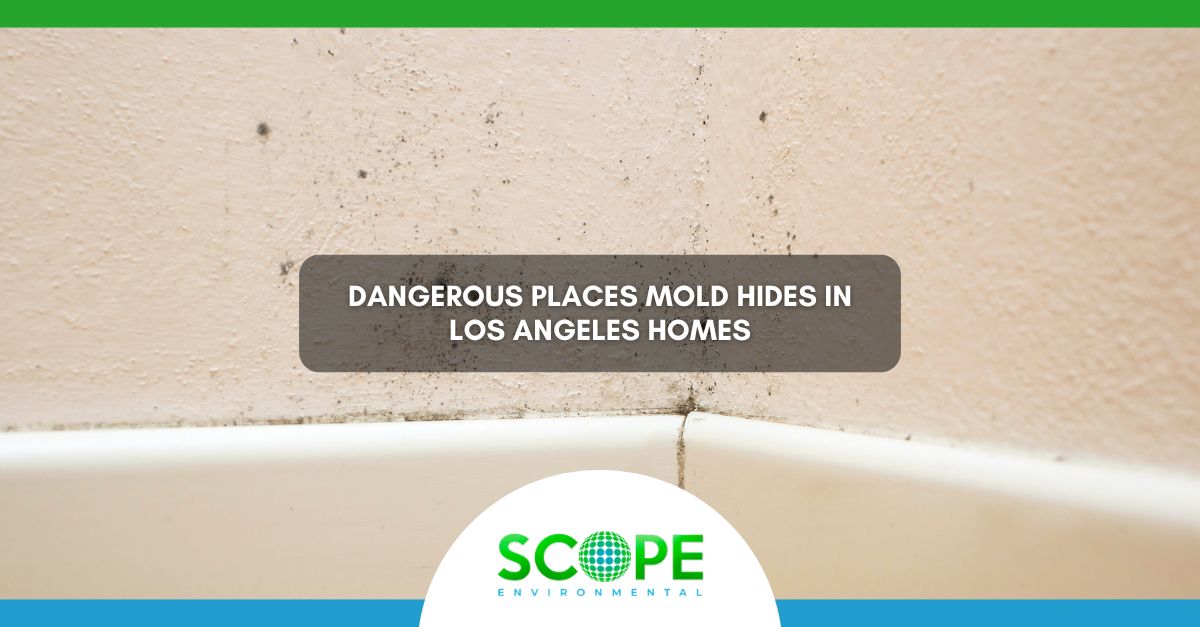
Los Angeles is known for its beautiful weather and endless sunshine. Yet the local climate also harbors a hidden threat for homeowners: hidden mold. The unique combination of coastal marine layers, sudden heat waves, and occasional intense winter rain creates the perfect breeding ground for indoor mold.
Mold spores are microscopic and incredibly resourceful. They only need a small amount of moisture and an organic food source to thrive. By the time you actually see a dark patch on your drywall or smell a musty odor, the fungal growth has likely been spreading out of sight for weeks. This hidden proliferation can lead to serious structural damage and trigger severe respiratory issues for your family.
Protecting your home requires proactive vigilance. You have to know exactly where to look to catch an infestation early. Here are the most dangerous places mold hides in Los Angeles homes, and what you can do to stop it from taking over your living space.
The Most Common Hidden Mold Hotspots
Fungal growth rarely starts out in the open. It prefers dark, undisturbed areas where moisture accumulates unnoticed.
Behind Kitchen Cabinets
Your kitchen is a high-traffic area filled with plumbing fixtures and appliances. A slow drip from a sink pipe, a leaking dishwasher hose, or even heavy condensation from cooking can introduce moisture to the drywall behind your cabinets. Because the cabinets block airflow and light, the trapped water cannot evaporate. Mold will silently consume the drywall and the wooden backing of your cabinetry. Homeowners often only discover the problem when they remodel their kitchen or when a strong, earthy smell overpowers the room.
Under Laminate Flooring
Laminate flooring is a popular choice for modern LA homes. Unfortunately, it is highly susceptible to hidden mold. Many homes in Southern California are built on concrete slabs, which naturally absorb and release ground moisture. If the flooring lacks a proper vapor barrier, this moisture becomes trapped directly beneath the laminate planks. Additionally, spilled liquids that seep through the seams can pool underneath. The dark, damp environment encourages rapid fungal growth that can eventually warp the floorboards and spread to your baseboards.
Inside HVAC Ducts
Los Angeles residents rely heavily on air conditioning to beat the summer heat. As cool air travels through ductwork located in hot attics or crawl spaces, condensation forms inside the metal or fiberglass channels. Dust and debris settle inside these ducts, providing an abundant food source for mold spores. Every time the system turns on, it blows microscopic mold spores directly into your living spaces. Regular duct inspections are essential for maintaining healthy indoor air quality.
Crawl Spaces
A large number of older LA homes feature raised foundations with crawl spaces. These low-clearance areas suffer from notoriously poor ventilation. Ground moisture naturally evaporates upward into the space. Without proper encapsulation or adequate airflow, the humidity levels spike. Mold easily colonizes the wooden floor joists and subflooring above. Left unchecked, this can compromise the structural integrity of your home’s foundation.
Behind Shower Tile
Bathrooms are naturally humid environments. While surface mold on grout lines is easy to clean, the real danger lies behind the tile. Tiny cracks in the grout or failing silicone caulk allow water to seep into the backing materials. Standard drywall will quickly absorb this water, leading to a massive fungal colony inside the wall cavity. By the time tiles begin to loosen or fall off, the infestation is usually extensive and requires a complete tear-out to remediate safely.
Inside Wall Insulation
Roof leaks during sudden winter downpours often send water trickling down into the wall cavities. The fiberglass or cellulose insulation acts like a sponge, soaking up the moisture and holding it against the wooden studs and drywall. Because the wall exterior remains intact, the interior mold growth remains entirely hidden. The insulation loses its thermal resistance, and the mold slowly eats away at the structural framing of your house.
Restore Your Home and Peace of Mind
Discovering hidden mold in your house is stressful. Handling the removal process incorrectly can actually cross-contaminate other rooms and make the situation worse. Professional mitigation is the only way to ensure the fungus is safely and permanently eradicated.
As a leader in fire and water cleanup and restoration, Scope Clean offers your insurance company an array of competitive advantages. We understand the stress and disruption that comes with property damage. Our goal is to restore both your property and your peace of mind through timely mitigation and strict adherence to IICRC standards. By utilizing advanced moisture detection equipment and specialized containment procedures, we eliminate hidden mold at the source.
Do not let a hidden moisture problem compromise your home. If you suspect mold is growing behind your walls or under your floors, contact Scope Clean today for a comprehensive inspection and expert remediation plan.