Moisture problems in homes are often invisible. Hidden humidity, condensation inside walls, and poor ventilation can fuel mold growth long before any visible signs appear. Knowing what to look for—odors, peeling paint, allergy flare-ups—can help you catch the problem early and protect your home and health.
You’ve checked for leaks. The ceiling looks fine. There are no puddles, no dripping pipes, no obvious signs of water damage. So your home must be dry, right?
Not necessarily.
Moisture doesn’t always announce itself. It hides inside walls, beneath flooring, and in the spaces between insulation layers—quietly building up until it creates the conditions that mold needs to thrive. By the time you can see a problem, it’s often been growing for weeks or months.
Why Hidden Moisture Is More Common Than You Think
Most homeowners associate water damage with dramatic events—a burst pipe, a flooded basement, a roof leak after a heavy storm. But the majority of moisture problems are far less dramatic in origin.
Everyday activities generate a surprising amount of water vapor. Cooking, showering, breathing, and even houseplants release humidity into the air. When that moisture has nowhere to go—because of poor ventilation or inadequate insulation—it condenses on cooler surfaces and gets absorbed into building materials.
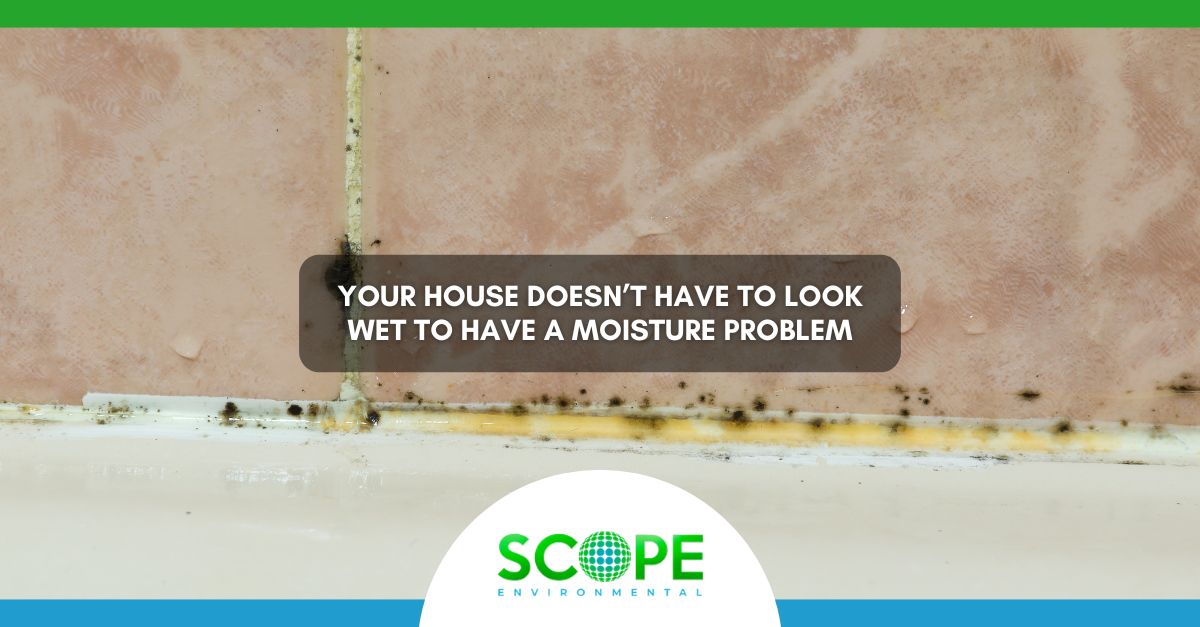
Over time, this creates persistently damp conditions inside walls, under subfloors, and behind bathroom tiles. These are exactly the environments where mold colonies establish and grow.
Can Moisture Be a Problem During Warm Seasons?
Many people assume moisture issues are a cold-weather concern—frozen pipes, ice dams, winter condensation. Warm seasons, however, carry their own moisture risks, and in some ways, they’re more deceptive.
During summer, high outdoor humidity combines with air conditioning to create a risky dynamic. Warm, humid air infiltrates the home through gaps in the building envelope. When it hits the cooler interior surfaces chilled by the AC system, it condenses. This happens inside wall cavities, around ductwork, and beneath vapor barriers—places you’ll never see unless you’re specifically looking.
Warm temperatures also accelerate mold growth. Mold grows fastest between 77°F and 86°F, meaning a humid summer can transform a minor moisture issue into a significant mold problem within days. If your air conditioning runs heavily in summer, and you notice musty odors or worsening allergy symptoms, hidden moisture may be the cause.
How to Detect Hidden Moisture in Your Home
What does hidden moisture smell like?
Mold often reveals itself through smell before it’s ever visible. A strong, musty, earthy odor—particularly in bathrooms, basements, closets, or rooms with exterior walls—is one of the clearest signs of hidden moisture and mold growth. If the smell intensifies after rain or when the AC is running, that’s a significant red flag.
Don’t dismiss a persistent smell just because you can’t find a source. Mold inside walls or under flooring can produce strong odors while remaining completely out of sight.
What are the visual clues of a hidden moisture problem?
Even when mold itself isn’t visible, moisture leaves traces:
- Peeling or bubbling paint: Paint lifts when the surface beneath it is repeatedly getting damp and drying out.
- Warped or buckled flooring: Wood and laminate floors absorb moisture and swell. Buckling near baseboards or in corners often points to moisture migrating up from below.
- Staining on ceilings or walls: Yellow or brownish staining, even without an obvious source, can indicate water traveling through materials from another area.
- Efflorescence on concrete: White, chalky deposits on basement walls or concrete floors indicate water moving through the masonry and depositing minerals on the surface.
- Condensation on windows: Persistent fogging or water droplets on interior glass suggests elevated indoor humidity levels—the same humidity feeding moisture buildup in less visible areas.
What health symptoms are associated with hidden mold?
Your body can sometimes detect a mold problem before your eyes or nose do. Unexplained allergy symptoms—sneezing, itchy eyes, a persistent cough—that improve when you leave the house and worsen when you return are worth investigating. The same is true for recurring headaches or respiratory irritation that doesn’t have an obvious cause.
These symptoms don’t confirm mold on their own, but combined with other warning signs, they’re reason enough to have your home professionally assessed.
How does thermal imaging help detect hidden moisture?
Thermal imaging cameras detect temperature differences in building surfaces. Because moisture causes materials to retain or release heat differently than dry materials, thermal imaging can reveal wet spots behind walls, under floors, and above ceilings that are completely invisible to the naked eye.
This technology has become a standard part of professional moisture investigations. A thermal inspection can identify exactly where moisture is concentrated, allowing for targeted remediation rather than guesswork.
What to Do If You Suspect a Moisture or Mold Problem
Should I try to find and fix mold myself?
For small, isolated patches of surface mold on non-porous materials, some limited DIY cleaning may be appropriate. But hidden mold—particularly black mold or mold growing inside structural materials—requires professional assessment and remediation.
Disturbing mold without proper containment releases spores into the air, which can spread the problem to unaffected areas and increase health risks. Professional remediation firms follow established protocols to contain, remove, and prevent the spread of mold during the process.
What should I look for in a mold remediation company?
Certification matters significantly here. The IICRC (Institute of Inspection, Cleaning and Restoration Certification) sets the industry standard for mold assessment and remediation. An IICRC-certified firm has demonstrated that its technicians are trained to follow rigorous, evidence-based protocols for identifying moisture sources, containing mold growth, and restoring affected materials safely.
If you notice or suspect that mold is growing in your home, contact Scope Environmental, an IICRC-certified firm that adheres strictly to IICRC Standards. Scope Environmental offers a thorough evaluation process that includes thermal imaging—one of the most effective tools for locating moisture that isn’t visible from the surface. The team provides complete mold and black mold removal services, along with personalized prevention strategies to help homeowners avoid future problems.
How to Reduce Moisture Levels in Your Home
Prevention is always less costly than remediation. A few consistent habits and upgrades can significantly reduce your home’s moisture load:
- Ventilate bathrooms and kitchens: Run exhaust fans during and for at least 20 minutes after cooking or showering. Make sure fans vent to the exterior, not just into the attic.
- Use a dehumidifier: In basements, crawl spaces, or any consistently humid area, a dehumidifier can maintain humidity below the 60% threshold that mold requires to grow.
- Seal gaps in the building envelope: Cracks around windows, doors, and utility penetrations allow humid outdoor air to enter and condense inside the structure.
- Monitor indoor humidity: A basic hygrometer costs under $20 and allows you to track indoor humidity levels. The EPA recommends keeping indoor humidity between 30% and 50%.
- Check HVAC drainage: Air conditioning units produce condensate that must drain properly. A blocked condensate line can drip into walls, ceilings, or crawl spaces undetected.
When Smell Is Your Only Warning, Act on It
Hidden moisture problems don’t wait. By the time visible damage appears, structural materials may already be compromised and mold colonies well established. The good news is that the warning signs—odors, health symptoms, subtle visual cues—are there for those who know what to look for.
If something in your home smells off, don’t wait for visible confirmation. Contact Scope Environmental for a professional moisture evaluation and thermal imaging inspection for mold. Catching the problem early is almost always faster, safer, and significantly less expensive than addressing it after the damage has already spread.