Watching water seep into your favorite couch or your grandmother’s dresser is a gut-wrenching experience. Your first instinct might be to assume everything is ruined. But that’s not always true. Water damage restoration professionals use specialized techniques to dry, clean, and salvage furniture that would otherwise end up in a landfill.
This post breaks down what furniture can typically be saved after water damage, what usually needs to be replaced, and how professional restoration services make the difference between a costly loss and a successful recovery.
What furniture can be saved after water damage?
The good news: many pieces have a real shot at survival, especially with quick, professional intervention.
Solid wood furniture holds up reasonably well against water exposure. Dressers, tables, and bed frames made from solid wood can often be dried out, refinished, and restored to near-original condition. The key is catching it early, before the wood has time to warp, crack, or develop mold.
Leather furniture is surprisingly resilient. While leather can stiffen or discolor when wet, professional cleaning and conditioning can often restore its texture and appearance.
Upholstered furniture is a mixed bag. If the fabric itself got wet but the padding underneath wasn’t submerged for long, restoration specialists can often clean, dry, and deodorize the piece successfully. The determining factor is usually how deep the water penetrated and how long it sat there.
Metal furniture frames, like those found in some bed frames or outdoor furniture, typically survive water exposure well. The main concern is rust, which restoration professionals can treat if caught in time.
What furniture should you say goodbye to?
Unfortunately, not everything can be saved, and knowing when to let go can prevent bigger problems down the road.
Particleboard and MDF furniture are among the hardest hit. These materials, common in budget furniture and flat-pack items, absorb water like a sponge and swell, warp, or disintegrate. Once compromised, this type of furniture rarely regains its structural integrity.
Mattresses and box springs almost always need to be replaced after significant water exposure. Their dense internal materials make thorough drying nearly impossible, creating an environment where mold and bacteria can thrive undetected.
Furniture exposed to contaminated water falls into a different category altogether. If the water damage stems from a sewage backup or floodwater (what restoration professionals call “black water”), any porous furniture it touched should generally be discarded, regardless of the material. The health risks from bacteria and pathogens simply outweigh the value of restoration.
Furniture with visible mold growth that has spread extensively also becomes difficult to salvage safely. While professionals can treat minor mold, widespread growth often means the damage goes deeper than what’s visible on the surface.
How can professional water damage restoration help?
This is where the timeline becomes critical. According to the Institute of Inspection, Cleaning and Restoration Certification (IICRC), mold can begin growing within 24 to 48 hours of water exposure, which is why speed matters as much as skill when it comes to saving furniture.
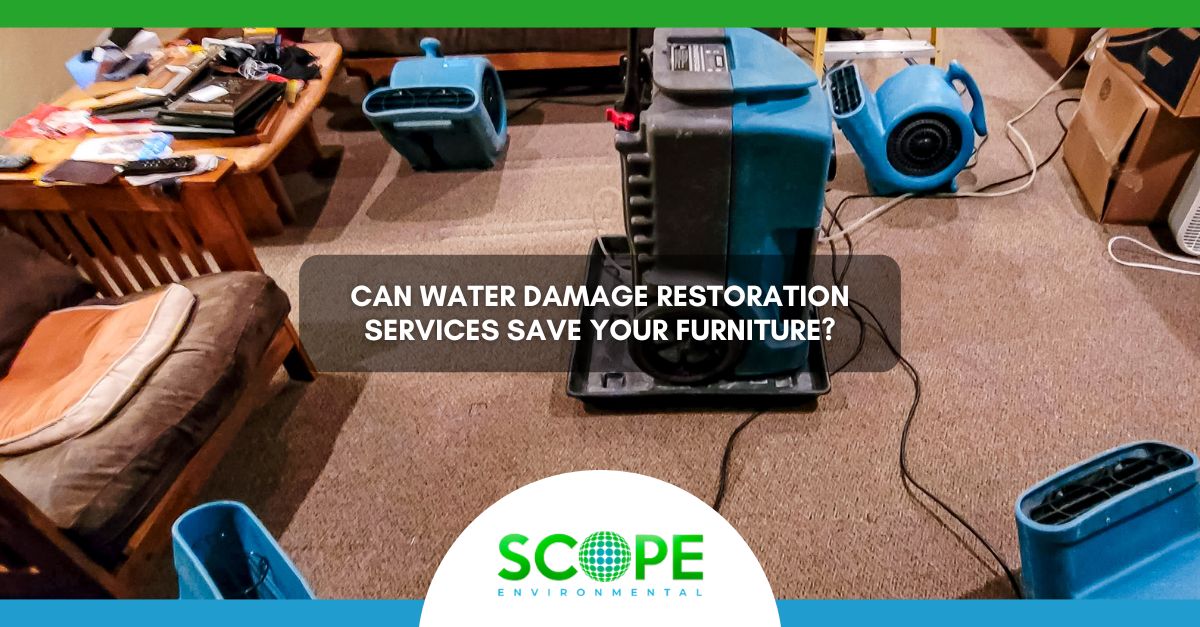
Professional restoration companies bring equipment and expertise that most homeowners simply don’t have access to. Industrial dehumidifiers and air movers extract moisture from furniture far more effectively than fans or open windows. Moisture meters allow technicians to measure exactly how much water has been absorbed, even in spots that look dry on the surface. This precision helps them decide what’s worth restoring and what isn’t.
Restoration specialists also understand material-specific treatment. Wood furniture, for example, needs slow, controlled drying to prevent further cracking or warping. Upholstery may require specialized cleaning agents to remove odors and prevent bacterial growth. Attempting these processes without the right knowledge often does more harm than good.
Choose professional restoration if you’re dealing with furniture that has sentimental or significant monetary value, since the cost of expert treatment is often far lower than replacement. If you’re working with inexpensive or already-damaged pieces, replacement may be the more practical choice.
Water damage restoration can’t be put off. That’s why Scope Environmental is available 24/7/365. When water damages your home, business, or any other kind of building, Scope Environmental can be there within an hour of your call, giving your furniture the best possible chance at survival.
Act fast to give your furniture the best chance
The line between saving and losing your furniture after water damage often comes down to hours, not days. The faster water is extracted and the drying process begins, the better the odds of preserving what matters to you.
If you’re facing water damage right now, don’t wait to see how things play out. Contact a professional water damage restoration company immediately, document the damage with photos for insurance purposes, and avoid moving wet furniture more than necessary, as this can spread moisture to unaffected areas.