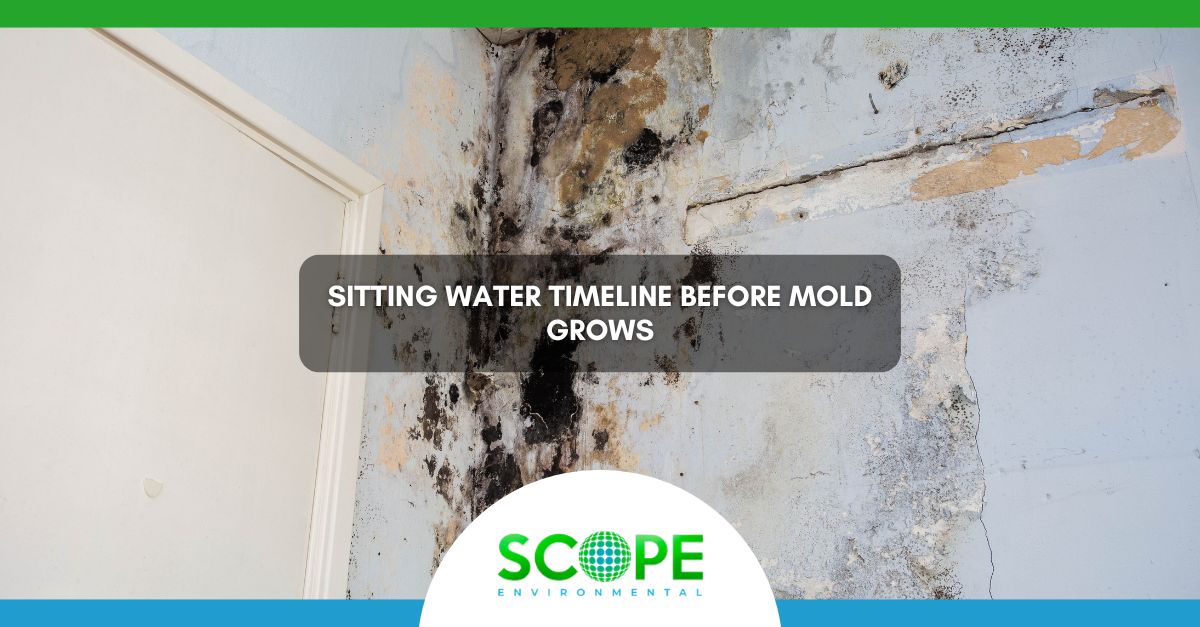
You notice a small puddle under the sink. Maybe a pipe dripped overnight, or a window let in some rain. It doesn’t look serious, so you leave it to deal with later. But here’s the thing—mold growth doesn’t wait for a convenient time.
Understanding exactly how fast mold can take hold after water exposure could save you from a costly, stressful remediation process. This post breaks down the mold timeline, what conditions accelerate growth, how difficult mold is to remove once it sets in, and what you can do to protect your home before a small leak becomes a major problem.
How Long Does It Take for Mold to Grow After Water Exposure?
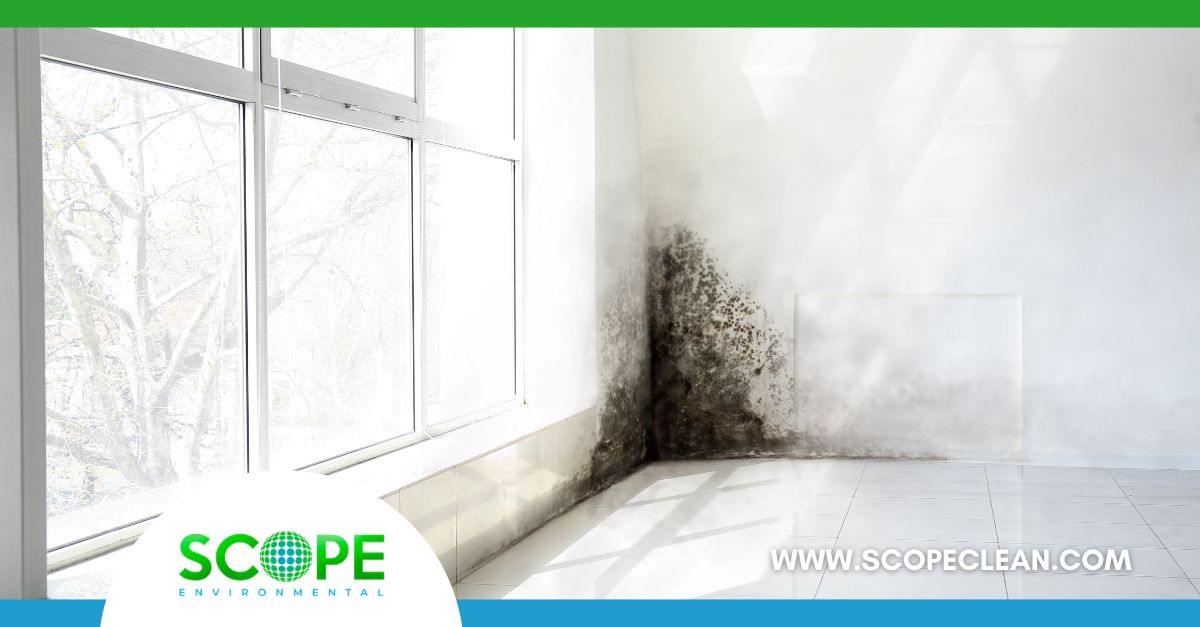
The short answer: 24 to 48 hours. Under the right conditions, mold spores—which are present in virtually every indoor environment—can begin to colonize a damp surface within just one to two days. By the 72-hour mark, visible mold growth can appear on porous materials like drywall, wood, carpet, and insulation.
This timeline assumes a few key factors are in play:
- Temperature: Mold thrives between 60°F and 80°F (15°C–27°C), which happens to be the typical indoor range for most homes.
- Humidity: Relative humidity above 60% creates an ideal breeding environment.
- Material: Porous surfaces like wood, fabric, and drywall absorb moisture quickly and give mold a surface to anchor to.
- Darkness: Mold grows faster in dark, poorly ventilated spaces—think inside walls, under flooring, and inside cabinets.
So that slow leak you’ve been meaning to fix? It may have already given mold a head start.
What Happens in the First 24–72 Hours After Water Exposure?
Mold growth follows a predictable progression:
Hours 1–12: Spore Activation
Mold spores absorb moisture from the wet surface and begin germinating. This phase is invisible to the naked eye, but the process has already begun.
Hours 12–24: Hyphae Formation
Spores begin developing hyphae—thread-like structures that allow mold to dig into porous surfaces. At this point, the mold is microscopic but actively spreading.
Hours 24–48: Colonization
Colonies start forming. You still may not see anything, but the mold has now established a foothold on the material.
Hours 48–72 and Beyond: Visible Growth
By day three, visible patches of mold may appear—often gray, green, black, or white, depending on the species. At this stage, spore release into the air increases, meaning the mold is spreading beyond the original site.
The takeaway: water damage becomes a mold problem faster than most homeowners expect.
Can You Smell Mold Before You See It?
Yes—and this is one of the most important early warning signs. Mold produces microbial volatile organic compounds (MVOCs) during its growth process, which create that distinct musty, earthy smell. Many homeowners notice the odor days before any visible growth appears.
If a room smells damp or musty after a water event, don’t dismiss it. That scent is often a sign that mold has already begun colonizing a hidden surface—inside a wall cavity, beneath flooring, or behind cabinetry.
What Types of Water Events Lead to Mold Growth?
Not all water exposure carries the same mold risk, but nearly every type of moisture event can trigger growth if left unaddressed:
- Roof leaks: Water seeps into insulation and ceiling joists, areas that rarely dry naturally.
- Plumbing leaks: Slow drips inside walls are particularly dangerous because they go undetected for weeks or months.
- Flooding: Ground-level flooding introduces contaminants alongside moisture, accelerating mold growth.
- Condensation: Repeated condensation on windows, pipes, or poorly insulated walls creates ongoing moisture that mold exploits.
- Appliance malfunctions: Dishwasher or washing machine overflows can saturate flooring quickly.
Even high indoor humidity—without a direct water event—can fuel mold growth in bathrooms, basements, and crawl spaces over time.
How Hard Is It to Get Rid of Mold Once It’s Established?
This is where many homeowners underestimate the challenge. Removing mold isn’t as simple as wiping down a surface. Once mold has colonized a porous material, its root structures (hyphae) penetrate below the surface. Cleaning what you can see leaves the underlying growth intact.
Surface Mold vs. Deep Mold
Surface mold on non-porous materials—like tile or sealed concrete—can sometimes be cleaned with appropriate antifungal solutions. But mold that has penetrated drywall, wood framing, carpet padding, or insulation typically requires physical removal of the affected material.
Why DIY Mold Removal Often Falls Short
Bleach is commonly recommended for mold removal, but it has significant limitations. Bleach works on non-porous surfaces but doesn’t penetrate porous materials deeply enough to kill mold at the root. Scrubbing visible mold without containment also disturbs spores, sending them airborne and spreading contamination to other areas of your home.
Inadequate personal protective equipment is another risk. Mold exposure during removal—especially black mold (Stachybotrys chartarum)—can trigger respiratory symptoms, skin irritation, and allergic reactions.
The Scope of Professional Mold Remediation
Professional remediation involves more than cleaning. A certified firm will:
- Assess the full extent of the contamination using moisture meters, air sampling, and thermal imaging to detect mold behind walls and under flooring.
- Contain the affected area to prevent cross-contamination during removal.
- Remove and dispose of unsalvageable materials according to industry standards.
- Apply antimicrobial treatments to affected surfaces.
- Verify clearance through post-remediation testing.
Skipping any of these steps increases the risk of mold returning—often in the same location.
When Should You Call a Professional?
If any of the following apply, professional evaluation is the right call:
- The affected area covers more than 10 square feet (roughly a 3×3 foot patch).
- You suspect mold is growing inside walls, under floors, or in the HVAC system.
- Anyone in the home has pre-existing respiratory conditions, allergies, or a compromised immune system.
- You’ve cleaned visible mold but the musty smell persists.
- A water event went undetected for more than 24 hours.
If you notice or suspect mold in your home, contact Scope Environmental—an IICRC Certified firm that adheres strictly to IICRC Standards. Scope Environmental offers professional mold and black mold removal, along with thermal imaging to detect hidden moisture and mold behind walls and under surfaces. Their team also provides customers with practical prevention methods and tips to reduce the risk of recurrence.
How to Prevent Mold After a Water Event
Speed is the most effective tool you have. The goal is to dry affected materials thoroughly within 24 to 48 hours of water exposure.
Immediate steps:
- Remove standing water using a wet/dry vacuum or mop.
- Open windows and use fans to circulate air (unless outdoor humidity is high).
- Run a dehumidifier to reduce moisture levels below 50%.
- Pull up wet rugs and carpet padding—these materials dry slowly and mold very quickly.
- Remove wet drywall and insulation if they’ve been saturated.
Longer-term prevention:
- Fix plumbing leaks promptly, even slow drips.
- Inspect your roof and gutters regularly.
- Ensure your home is properly ventilated, especially in bathrooms, kitchens, and laundry areas.
- Use exhaust fans during and after showers, and run them for at least 20 minutes.
- Monitor indoor humidity with a hygrometer and keep it between 30% and 50%.
The Bottom Line: Act Fast, Don’t Wait It Out
Mold doesn’t give you much of a grace period. Within 24 to 48 hours of water exposure, the conditions for mold growth are set. Within 72 hours, visible colonies can appear. And once mold establishes itself inside porous building materials, removal becomes a complex, multi-step process that almost always requires professional help.
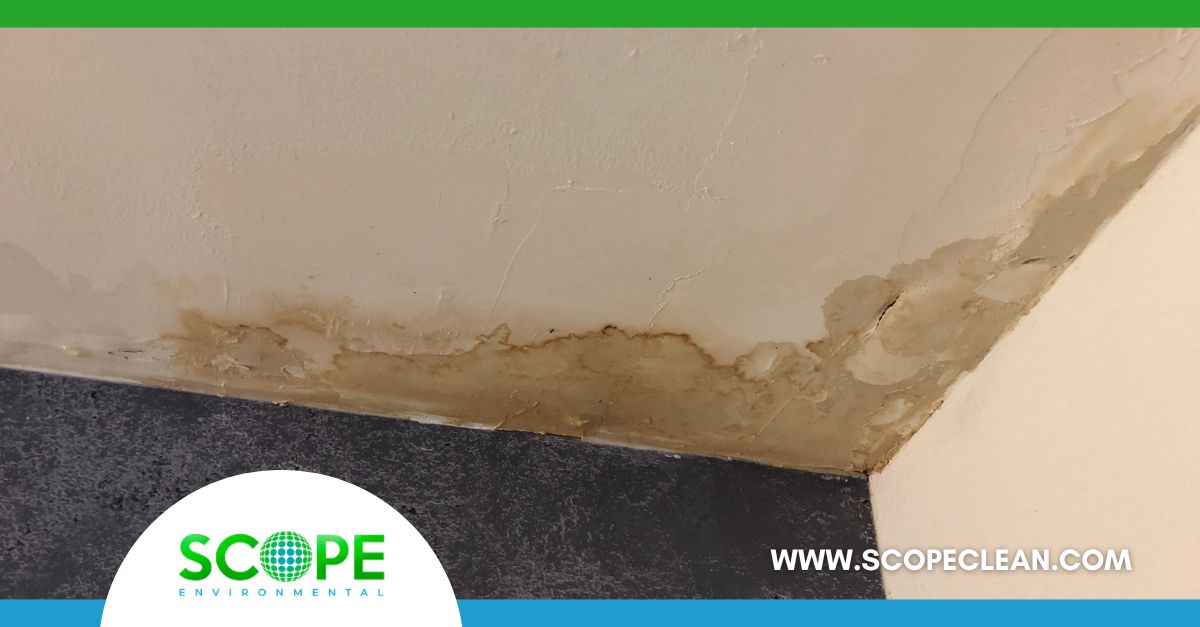
The musty smell, the discolored patch on the ceiling, the soft spot in the drywall—these are signals worth taking seriously. The longer you wait, the larger the remediation job, and the higher the cost.
If you’ve experienced recent water damage or you suspect mold may already be present, don’t guess. A professional evaluation from a certified firm like Scope Environmental can give you a clear picture of what’s happening—and what it takes to fix it.