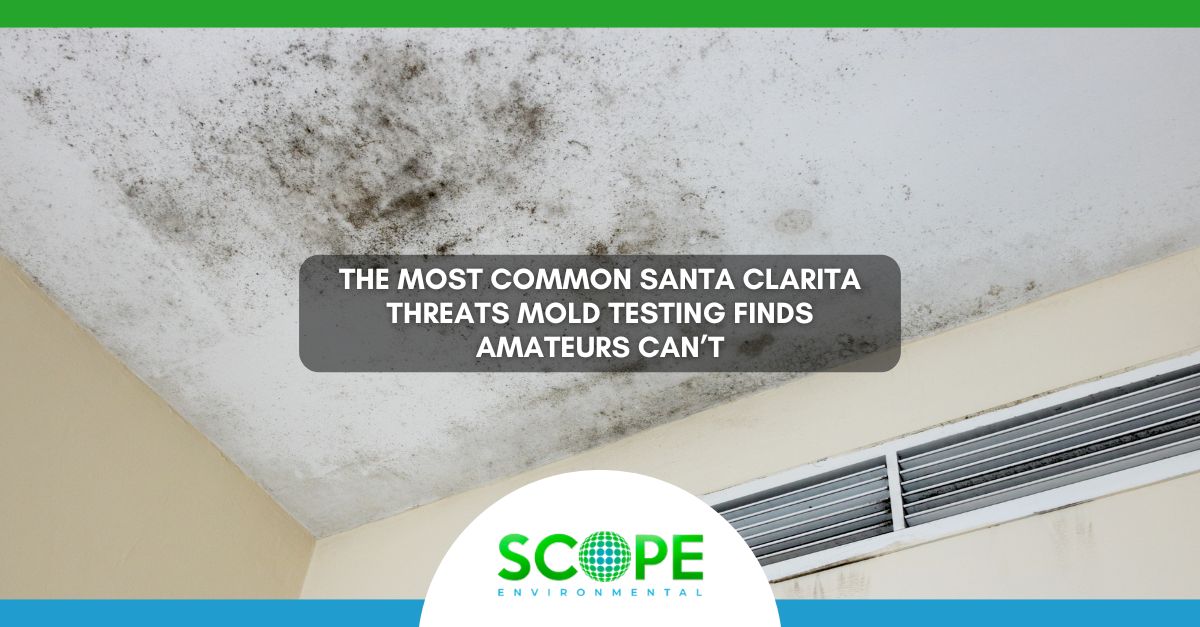
Santa Clarita homes face a unique combination of climate patterns, construction methods, and year-round HVAC use that create mold risks most people never see. We take pride in supplying the kind of pro mold testing Santa Clarita homeowners rely on.
This goes far beyond what looks dry, clean, or recently painted. Our service is built to uncover hidden conditions that quietly damage structures, compromise indoor air quality, and spread long before visible signs appear.
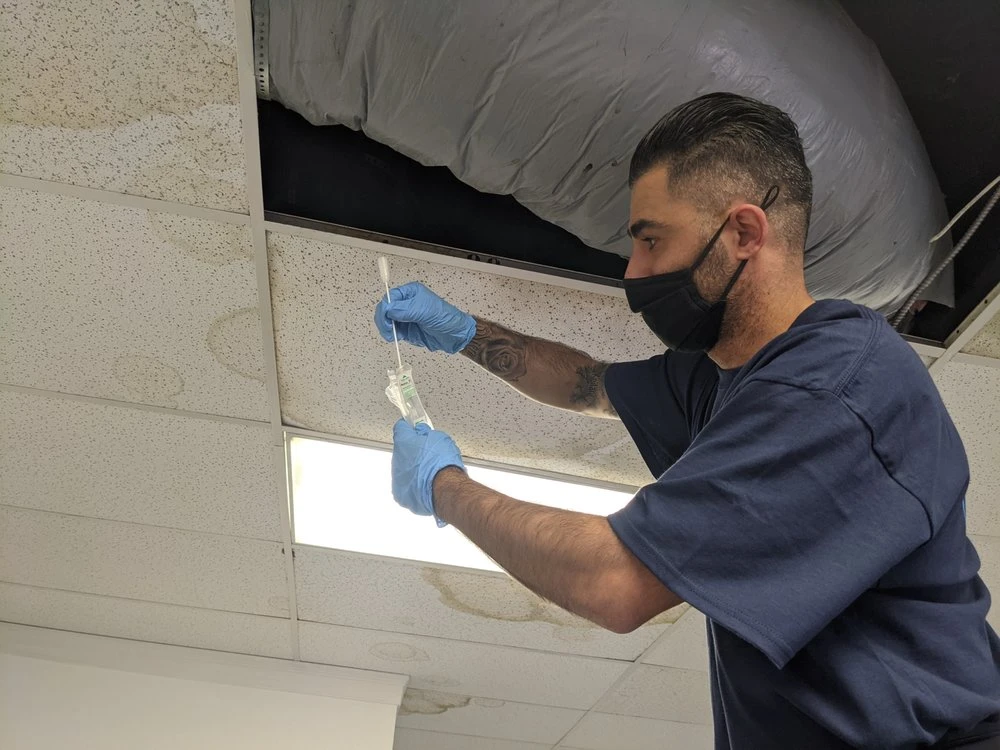
Santa Clarita’s Hidden Mold Environment
Santa Clarita Valley properties sit in a transition zone between coastal influence and high desert conditions. This creates structural stressors that are easy to underestimate.
Regional factors we account for during testing include:
- Sharp daily and seasonal temperature changes
- Periodic winter rain followed by long dry stretches
- Modern construction methods that emphasize energy efficiency over ventilation
- Continuous HVAC operation even during cooler months
These conditions combine to create ideal environments for concealed moisture and microbial growth (which leads to mold) that standard visual checks cannot detect.
The Micro-Climate Threat: Santa Clarita’s Thermal Flux
One of the most overlooked mold triggers in Santa Clarita is rapid temperature fluctuation within wall assemblies. During winter months, it is common to experience:
- Daytime temperatures in the mid-70s
- Overnight lows dropping into the 30s
- Heated interiors meeting cold exterior walls
This pattern causes interstitial condensation—moisture forming inside wall cavities, not on visible surfaces.
Amateur Oversight in Thermal Conditions
A non-professional inspection often includes:
- Touching drywall to see if it feels damp
- Checking for visible staining
- Assuming no smell means no issue
These methods completely miss moisture forming behind finished surfaces.
What Our Mold Testing Identifies
Our approach to mold testing in Santa Clarita properties includes tools and techniques designed for these exact conditions:
- Thermal imaging to locate temperature differentials
- Identification of cold spots where condensation forms repeatedly
- Targeted moisture readings inside wall systems
This allows us to detect mold-supporting conditions long before discoloration or odor develops, helping prevent structural damage and costly tear-outs.
Stucco Concerns in Newer Santa Clarita Developments
Many neighborhoods in the Santa Clarita Valley feature newer homes with modern stucco exteriors. While visually clean and durable, these systems can hide serious moisture problems when details are not installed perfectly.
Common contributors include:
- Improper flashing around windows and doors
- Inadequate weep screeds at the base of walls
- Sealant failures following heavy rain
Water that entered weeks ago may still be sitting inside wall assemblies, unable to evaporate.
Why Visual Checks Fail
Homeowners and handymen often look for:
- Bubbling paint
- Soft drywall near baseboards
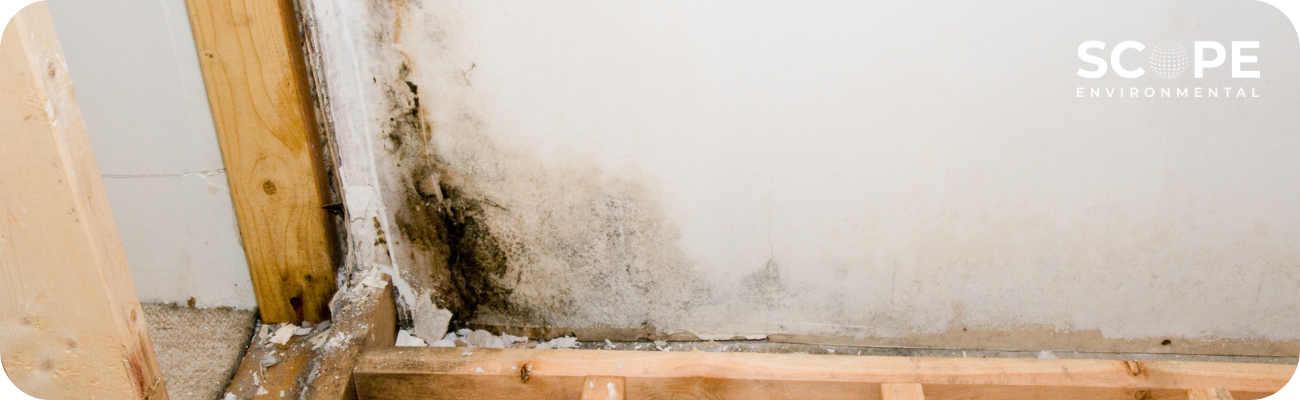
- Visible mold growth
By the time these signs appear, the problem is already advanced.
Professional Detection Methods We Use
Our Santa Clarita mold testing service uses advanced diagnostics such as:
- Moisture mapping to trace hidden water migration
- Air-cell sampling to analyze airborne spore levels
- Correlation between moisture data and microbial activity
This allows us to detect the presence of harmful spores, including Stachybotrys, before visible growth appears anywhere inside the home.
Attics and HVAC Systems: The Vanguard of Spores
Attics are often ignored during casual inspections, yet they are one of the most critical areas we evaluate. Santa Clarita attic environments frequently involve:
- Roof leaks during winter storms
- Saturated insulation that appears dry from below
- Poor airflow trapping moisture near roof decking
Once insulation is compromised, HVAC systems can spread spores throughout the property.
How HVAC Systems Amplify Mold Exposure
In the Santa Clarita climate:
- Heating and cooling systems run nearly year-round
- Air handlers pull air from multiple zones
- Contaminants can circulate through every room
If spores enter the system, they tend to not stay localized.
What Our Testing Process Covers
During mold testing, Santa Clarita homeowners trust us to:
- Inspect attic insulation and roof penetrations
- Collect air samples near supply and return vents
- Identify whether HVAC cycling is distributing spores
This step is critical in preventing whole-home contamination and protecting indoor air quality.
DIY Cleaning and Cross-Contamination Risks
One of the most damaging mistakes we encounter is well-intentioned DIY mold cleanup. These actions often make the situation worse.
Common amateur actions include:
- Scrubbing visible growth with bleach
- Removing small sections of drywall without containment
- Running household fans to “dry it out”
Why Bleach Triggers Spore Release
Many molds respond to surface disturbance by releasing spores as a defense mechanism. Scrubbing can cause:
- Spore bursts into surrounding air
- Contamination of adjacent rooms
- Deeper penetration into porous materials
Without controls, cleanup efforts can spread mold throughout the property.
Our Professional Protocol-Driven Approach
Professional Santa Clarita mold testing requires more than detection—it establishes a remediation roadmap. Our process includes:
- Creating a documented testing protocol
- Identifying exact contamination zones
- Determining where containment barriers are required
This protocol guides safe mold remediation while protecting unaffected areas of your home from cross-contamination.
Water Damage Events That Quietly Lead to Mold
Not all mold starts with visible flooding. Many Santa Clarita cases begin with small, overlooked water events.
Examples include:
- Appliance supply line leaks
- Slow plumbing drips inside walls
- Condensation buildup around ducts
If moisture is not properly dried, mold growth can begin within 24 to 48 hours.
How We Trace Moisture History
Our Santa Clarita mold testing service focuses on identifying both current and past moisture events by:
- Reading moisture patterns in structural materials
- Identifying drying failures after water exposure
- Linking microbial growth to specific leak sources
This approach helps stop recurring issues instead of treating symptoms.
When Fire and Smoke Events Create Mold Conditions
Fire incidents often introduce water into a structure through suppression efforts. Even when flames are contained, moisture can linger.
After fire-related incidents, properties may require fire or smoke damage restoration.
If water intrusion from firefighting is not properly addressed, mold growth can develop behind walls and ceilings weeks later.
Our integrated testing ensures these hidden risks are identified before secondary damage escalates.
How We Support the Recovery Process
We understand that discovering mold can feel overwhelming. Our role is to provide clarity and direction.
As part of our service, we assist with:
- Clear reporting that explains findings in plain language
- Coordination with mold remediation teams using our protocol
- Guidance for documentation needed for insurance help
Our goal is to remove uncertainty while protecting both your property and your health.
What Sets Our Professional Testing Apart in Santa Clarita
Amateur inspections focus on what can be seen. Our Santa Clarita mold testing approach focuses on what cannot. We can help you by:
- Identifying mold before it becomes visible
- Preventing unnecessary demolition
- Reducing long-term repair costs
- Protecting indoor air quality
By addressing the root conditions that allow mold to grow, we help Santa Clarita homeowners stay ahead of damage rather than reacting to it.
Common Warning Signs That Warrant Testing
You may benefit from professional testing if you notice:
- Persistent allergies or respiratory irritation indoors
- Musty odors without visible mold
- Recent roof leaks or plumbing repairs
- Temperature-related condensation on walls or windows
How Our Service Helps You Move Forward
Every property is different, especially in a climate as variable as Santa Clarita’s. Our testing service is designed to adapt to those differences. With us, you can expect:
- Detailed assessments tailored to local conditions
- Actionable results that guide next steps
- Confidence that no hidden areas were overlooked
When it comes to mold testing in Santa Clarita homeowners depend on thoroughness and professionalism make all the difference.