After a fire, many property owners expect the smell of smoke to fade once the visible damage is cleaned. Yet in many cases, the odor lingers for weeks or even months, affecting comfort, indoor air quality, and peace of mind. Effective smoke odor removal requires more than surface-level cleaning. Often, it involves identifying the hidden sources of odor and addressing them thoroughly.
At Scope Environmental, we understand how frustrating that can be, especially when you’ve already taken steps to clean and restore your space.
There are many reasons why smoke odors persist, but there are steps you can take to eliminate them for good.
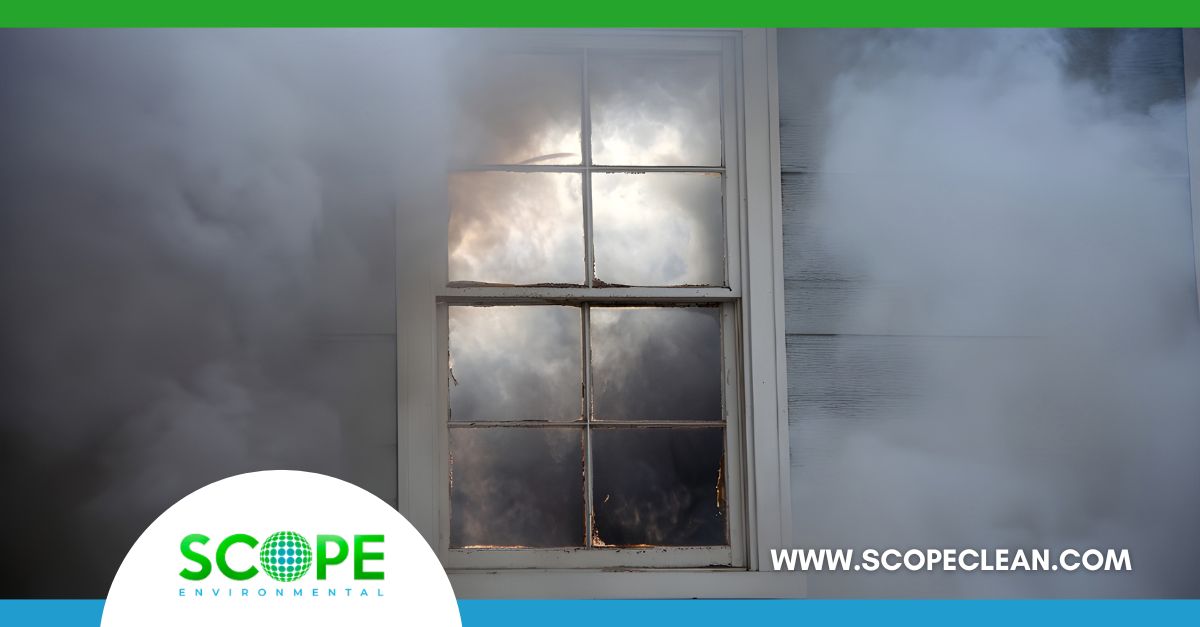
Why Smoke Odors Linger Long After a Fire
Smoke behaves differently than most contaminants. It doesn’t just sit on surfaces—it penetrates deeply into materials throughout your home or building.
Porous Materials Trap Odor Particles
Smoke particles are microscopic and easily embed themselves into porous materials such as:
- Drywall
- Upholstery
- Carpeting
- Wood framing
- Insulation
Even if surfaces look clean, these materials can continue releasing odor over time. Without proper smoke odor removal techniques, the smell will keep resurfacing, especially in warmer conditions.
HVAC Systems Spread Residual Smoke
Your heating and cooling system can unknowingly circulate smoke particles throughout the property. If ducts, vents, and filters are contaminated, every time the system runs, it redistributes odor.
This is one of the most common reasons people continue to notice smoke smells even after cleaning visible areas.
Soot Residue Isn’t Always Visible
Soot can settle in hidden or hard-to-reach areas such as:
- Inside cabinets
- Behind walls
- Within light fixtures
- Above ceilings
The Role of Materials and Fire Type
Not all fires produce the same type of smoke, and that directly impacts how odors behave.
Synthetic Materials Create Stronger Odors
Modern homes contain many synthetic materials—plastics, foams, and treated fabrics. When burned, these materials release chemical-laden smoke that clings more aggressively to surfaces.
This type of residue is harder to remove and often requires advanced methods rather than standard cleaning.
Wet Smoke vs. Dry Smoke
Fires can produce different types of smoke:
- Wet smoke leaves a sticky, smeary residue that is difficult to clean
- Dry smoke creates a fine powder that spreads easily and settles into cracks
Each type requires a specific cleaning approach. Using the wrong method can actually worsen the odor problem.
Common Mistakes That Make Smoke Odor Worse
After a fire, it’s natural to want to clean immediately. However, certain actions can unintentionally make the situation more difficult.
Using Household Cleaners Alone
Standard cleaning products are not designed to neutralize smoke particles. They may temporarily mask the odor, but they don’t eliminate the source.
Painting Over Smoke-Damaged Areas
Applying paint without properly sealing and treating the underlying material traps odor inside walls. Over time, the smell can bleed through again.
Ignoring Soft Surfaces
Furniture, drapes, and rugs often hold the strongest odors. Skipping these items during cleanup allows smoke smells to persist throughout the space.
Steps to Take for Effective Smoke Odor Removal
Eliminating smoke odor requires a structured, multi-step process. At Scope Environmental, we approach each property with a tailored plan based on the extent of damage.
Inspection and Assessment
The first step is identifying where smoke has traveled. This includes visible areas and hidden spaces where particles may have settled.
A thorough professional inspection from our experts helps determine the most effective odor removal strategy for your specific situation.
Deep Cleaning of Affected Surfaces
We clean all impacted surfaces using specialized solutions designed to break down soot and smoke residue. This includes:
- Walls and ceilings
- Floors and baseboards
- Fixtures and cabinetry
Treating Soft Materials
Soft goods often require advanced techniques such as deep extraction cleaning or specialized deodorization processes. In some cases, materials that cannot be restored must be safely removed.
Air Filtration and Odor Neutralization
We use professional-grade air filtration systems to capture airborne particles. In addition, odor-neutralizing treatments are applied to eliminate lingering smells at the molecular level.
Addressing Structural Damage
Smoke odors often indicate deeper structural issues that need attention.
When Fire Damage Affects Building Materials
If fire has compromised structural components, those materials may continue to emit odor unless properly treated or replaced. This is where fire damage restoration becomes essential, ensuring both safety and long-term odor control.
Hidden Moisture Can Complicate Odor Issues
Water used to extinguish the fire can soak into walls and flooring. When combined with smoke residue, this creates a complex environment where odors become even more persistent.
Proper water damage restoration helps remove excess moisture and prevents additional complications that can worsen indoor air quality.
The Importance of Professional Equipment
Advanced tools make a significant difference in the effectiveness of smoke odor removal.
Industrial Air Scrubbers
These machines filter out microscopic particles from the air, improving air quality and reducing odor.
Thermal Fogging
Thermal fogging replicates the way smoke penetrates materials, allowing deodorizing agents to reach the same areas smoke affected.
Ozone and Hydroxyl Treatments
These treatments neutralize odor-causing molecules rather than covering them up. They are especially useful in severe cases where odors have deeply embedded into the structure.
Preventing Long-Term Odor Problems
Even after initial cleanup, it’s important to take steps to prevent odors from returning.
Seal and Protect Surfaces
After cleaning, applying sealants to certain materials can prevent residual odors from escaping over time.
Replace Severely Damaged Materials
Some materials cannot be fully restored. Removing and replacing them is sometimes the most effective way to achieve lasting odor removal.
Maintain Clean Air Systems
Ensuring your HVAC system is clean and functioning properly helps prevent the recirculation of smoke particles.
Health Concerns Linked to Smoke Residue
Lingering smoke odor is more than an inconvenience—it can impact your health.
Respiratory Irritation
Smoke particles can irritate the lungs, especially for individuals with asthma or allergies.
Skin and Eye Discomfort
Residue left behind can cause irritation when it comes into contact with skin or eyes.
Risk of Secondary Issues
In some cases, lingering moisture combined with fire damage can create conditions where mold remediation becomes necessary. Addressing both odor and moisture promptly helps prevent additional complications.
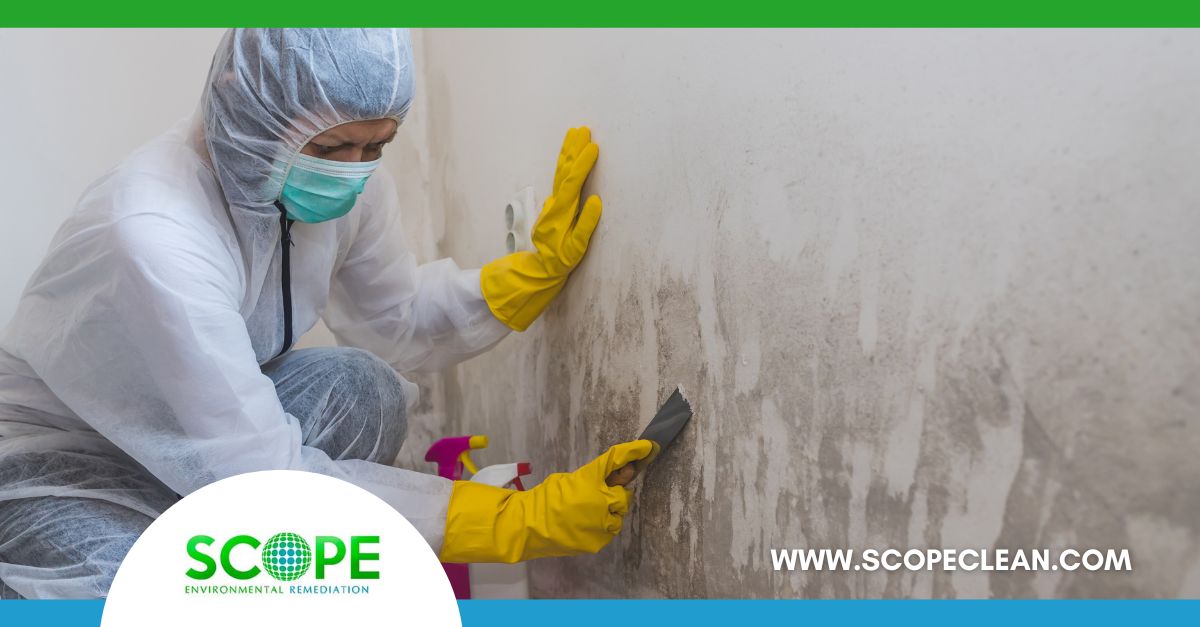
How Our Team Supports Full Recovery
At Scope Environmental, our team focuses on restoring your property as completely as possible. We understand that smoke damage affects more than just the structure—it disrupts your daily life.
Our process is designed to:
- Identify all sources of smoke odor
- Use targeted cleaning and deodorization methods
- Address both visible and hidden damage
- Improve indoor air quality
By combining experience with advanced equipment, we deliver smoke odor removal solutions that are thorough and long-lasting.
Pro Smoke Odor Removal to Restore Comfort and Air Quality
With the right approach, it’s possible to remove even deeply embedded smoke odors and restore a clean, healthy atmosphere. If the odor seems to disappear and then return, it often means the source hasn’t been fully addressed.
In these cases, professional smoke odor removal ensures that the problem is resolved at its root.
At Scope Environmental, we’re committed to helping property owners throughout Los Angeles and Ventura Counties move forward with confidence after fire damage.